Year: 2015

Q & A – The Assumption Question

Let’s discuss! In the previous post, we discussed the standard operating procedure to solve Assumption Questions – The Negation Method. The best way to really test whether you have understood a particular method of solving is to test it against tough questions. What makes a GMAT CR question tough? A tough question has trap options that are extremely relevant to the passage making it tough to eliminate them. Also, unlike a medium-level question, a tough question might have three close options, two which are very close and one close enough to be in the consideration set.
Critical Reasoning – The Assumption Question 1

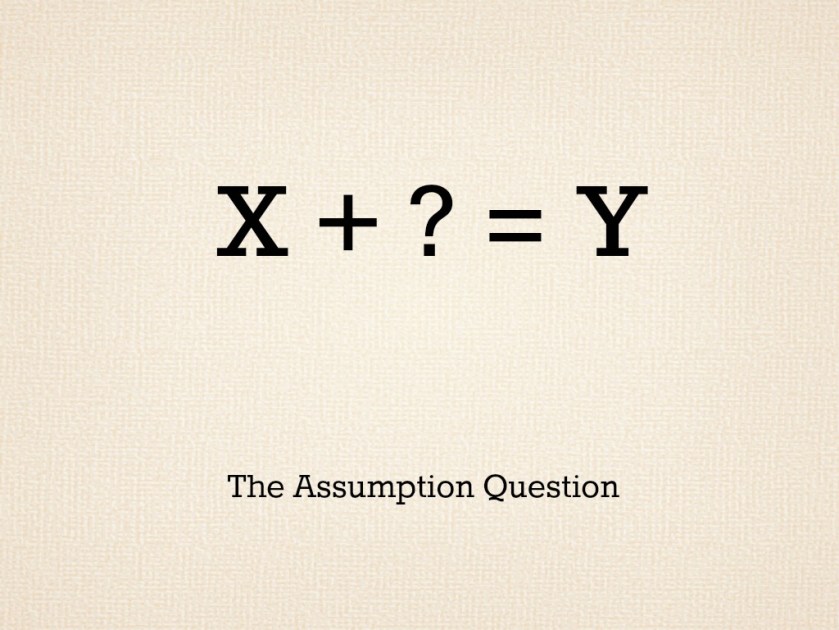
The Assumption Question is a Critical Reasoning Question Type on the GMAT® that gives test-takers a certain amount of trouble (the most troublesome being the Boldfaced Question Type). Test-takers often say that they have trouble in attaining a certain level of consistency on this question type. In this post we shall look at a standard operating procedure that will help you increase your accuracy level and choose the right option when faced with two seemingly correct options.

Sentence Correction – Usage 1

This is a common and seemingly easily resolvable grammatical conundrum — when does one use which and when does one use that? Most test-takers who have prepared for GMAT® Sentence Correction will have this answer at the tip of their tongues — essential/restrictive and non-essential/non-restrictive clause. What they mean is that which is used to state information that is not essential while that is used to state essential information. A easier way to remember this is by looking at the pair of sentences below: 1. These are the keys to the fourth car in the parking row, which is black. 2. These are the keys to the fourth car in the parking row that is black. From the first sentence you would get the keys to the fourth car in the parking row; the sentence gives you some additional information, namely that it is black in colour; even without this information you could have known which car you have the keys to — the fourth car in the row.

Critical Reasoning – The Conclusion Question 2

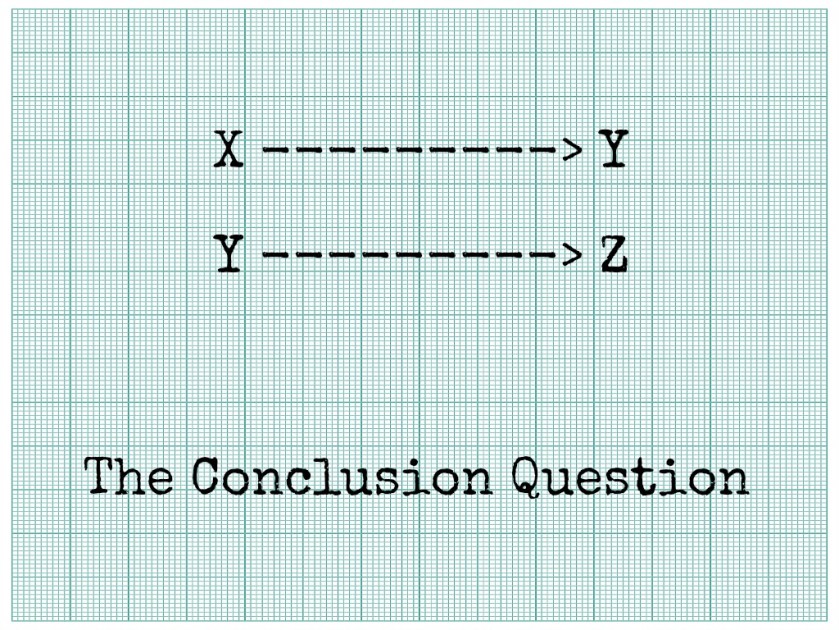
In the previous Critical Reasoning post we discussed one specific kind of logic that is tested on the Conclusion Question Type. In this post we will take a look at the only other type of standard logic tested on the conclusion questions. If you are able to understand apply the technique to solve these two logical structures, most conclusion questions should be a breeze. Let us take a GMAT Critical Reasoning question to examine this further. Although aspirin has been proven to eliminate moderate fever associated with some illnesses, many doctors no longer routinely recommend its use for this purpose. A moderate fever stimulates the activity of the body’s disease-fighting white blood cells and also inhibits the growth of many strains of disease-causing bacteria.

Will there be experimental questions on the GMAT?

All life is an experiment, the more experiments you make the better – Ralph Waldo Emerson The short answer to this question — yes. Now let’s get to the long answer. As we have discussed before in one of the earliest posts on this blog, the GMAT is an adaptive test. The Quant and Verbal sections will start with test-takers being posed a question of moderate difficulty and will proceed based on the test-taker’s response to that question. Depending upon whether the test-taker answers it correctly or incorrectly, the subsequent question will be easier or tougher.

Sentence Correction — Idiomatic Usage

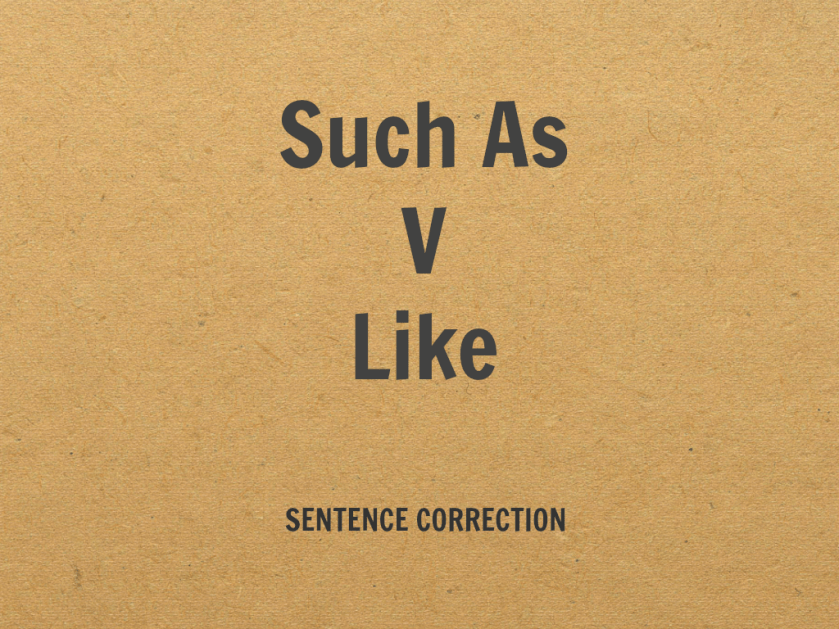
One of the most important things that test-takers need to keep in mind about the GMAT® Sentence Correction is that it is a test of Written and not Spoken English. This distinction comes to the fore when phrases that sound correct to the ear are in fact incorrect as per the GMAT® and as we will see in this post the converse can also be true — what sounds incorrect to the ear can in fact be error-free. One of the best examples of this is the usage of Such As V Like.

Critical Reasoning – The Conclusion Question 1

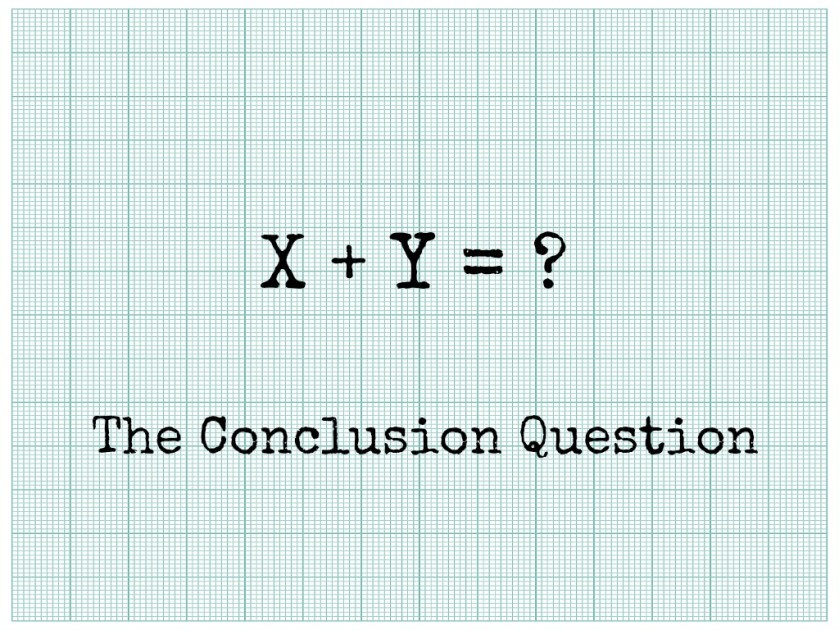
Of all Critical Reasoning Question Types on the GMAT® , the conclusion question is probably the easiest of the lot. The only thing that one needs to remember is that the conclusion should not be a possibility but a certainty based on the information given. Test-takers sometimes tend become adventurous and choose options that are not fully supported by the information since the correct option seems too obvious. But on the GMAT® it is the most straightforward option that turns out to be the conclusion.

How To Tackle Problems Involving Venn Diagrams

Problems involving Venn Diagrams do make a compulsory appearance on the Quantitative section of the GMAT® . But oftentimes it makes a lot of sense to treat these problems like logical reasoning problems rather Venn Diagrams. In fact in some cases you might not need to draw any diagram at all! The GMAT® problem below is the best illustration of the same. DIRECTIONS: Each data sufficiency problem below consists of a question and two statements, labeled (1) and (2), in which certain data are given. You have to decide whether the data given in the statements are sufficient for answering the question. Using the data given in the statements plus your knowledge of mathematics and everyday facts (such as the number of days in July or the meaning of counterclockwise), you are to option A if statement (1) ALONE is sufficient, but statement (2) alone is not sufficient to answer the question asked; B if statement (2) ALONE is sufficient, but statement (1) alone is not sufficient to answer the question asked; C if BOTH …