All posts filed under: GMAT Verbal

Q & A – The Assumption Question

Let’s discuss! In the previous post, we discussed the standard operating procedure to solve Assumption Questions – The Negation Method. The best way to really test whether you have understood a particular method of solving is to test it against tough questions. What makes a GMAT CR question tough? A tough question has trap options that are extremely relevant to the passage making it tough to eliminate them. Also, unlike a medium-level question, a tough question might have three close options, two which are very close and one close enough to be in the consideration set.
Critical Reasoning – The Assumption Question 1

The Assumption Question is a Critical Reasoning Question Type on the GMAT® that gives test-takers a certain amount of trouble (the most troublesome being the Boldfaced Question Type). Test-takers often say that they have trouble in attaining a certain level of consistency on this question type. In this post we shall look at a standard operating procedure that will help you increase your accuracy level and choose the right option when faced with two seemingly correct options.

Sentence Correction – Usage 1

This is a common and seemingly easily resolvable grammatical conundrum — when does one use which and when does one use that? Most test-takers who have prepared for GMAT® Sentence Correction will have this answer at the tip of their tongues — essential/restrictive and non-essential/non-restrictive clause. What they mean is that which is used to state information that is not essential while that is used to state essential information. A easier way to remember this is by looking at the pair of sentences below: 1. These are the keys to the fourth car in the parking row, which is black. 2. These are the keys to the fourth car in the parking row that is black. From the first sentence you would get the keys to the fourth car in the parking row; the sentence gives you some additional information, namely that it is black in colour; even without this information you could have known which car you have the keys to — the fourth car in the row.

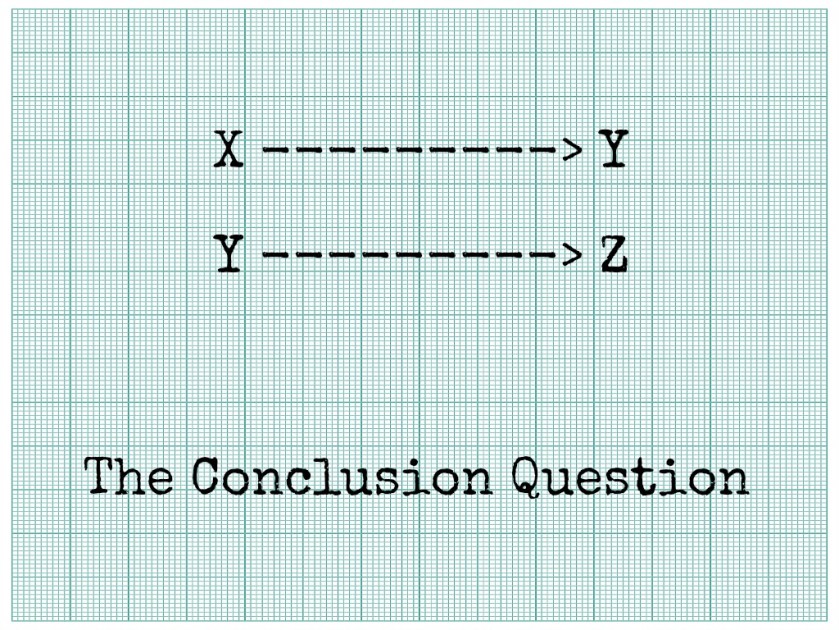
Critical Reasoning – The Conclusion Question 2

In the previous Critical Reasoning post we discussed one specific kind of logic that is tested on the Conclusion Question Type. In this post we will take a look at the only other type of standard logic tested on the conclusion questions. If you are able to understand apply the technique to solve these two logical structures, most conclusion questions should be a breeze. Let us take a GMAT Critical Reasoning question to examine this further. Although aspirin has been proven to eliminate moderate fever associated with some illnesses, many doctors no longer routinely recommend its use for this purpose. A moderate fever stimulates the activity of the body’s disease-fighting white blood cells and also inhibits the growth of many strains of disease-causing bacteria.

Sentence Correction — Idiomatic Usage

One of the most important things that test-takers need to keep in mind about the GMAT® Sentence Correction is that it is a test of Written and not Spoken English. This distinction comes to the fore when phrases that sound correct to the ear are in fact incorrect as per the GMAT® and as we will see in this post the converse can also be true — what sounds incorrect to the ear can in fact be error-free. One of the best examples of this is the usage of Such As V Like.

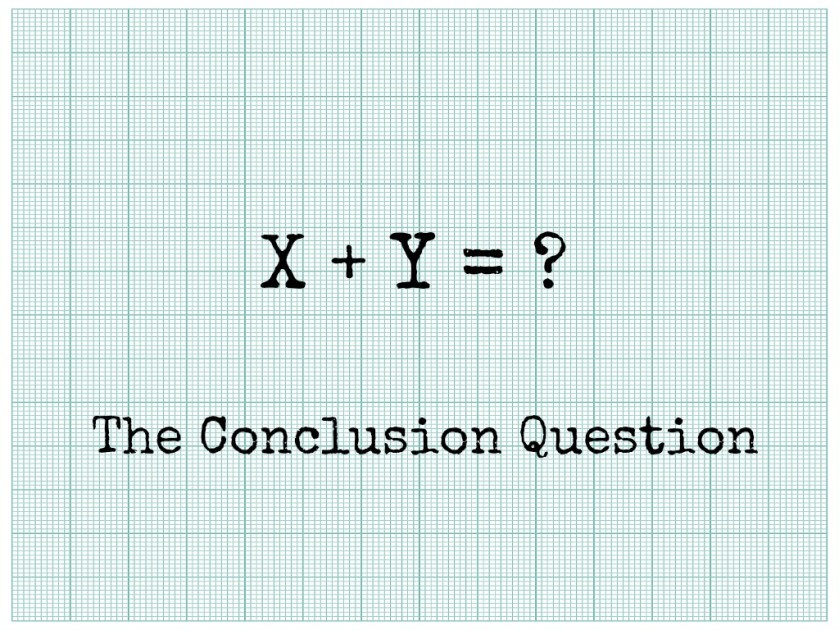
Critical Reasoning – The Conclusion Question 1

Of all Critical Reasoning Question Types on the GMAT® , the conclusion question is probably the easiest of the lot. The only thing that one needs to remember is that the conclusion should not be a possibility but a certainty based on the information given. Test-takers sometimes tend become adventurous and choose options that are not fully supported by the information since the correct option seems too obvious. But on the GMAT® it is the most straightforward option that turns out to be the conclusion.

How To Increase Your Speed On Sentence Correction – 2

In the previous Sentence Correction post we saw how answer options on the GMAT® SC display a 3/2 split that you should use to crash your solving time. Let us look at a few more GMAT® questions with the 3/2 split. 3/2 Spilt at the end of the options – Clue in the non-underlined part preceding options Rising inventories, when unaccompanied correspondingly by increases in sales, can lead to production cutbacks that would hamper economic growth. (A) when unaccompanied correspondingly by increases in sales, can lead (B) when not accompanied by corresponding increases in sales, possibly leads (C) when they were unaccompanied by corresponding sales increases, can lead (D) if not accompanied by correspondingly increased sales, possibly leads (E) if not accompanied by corresponding increases in sales, can lead In the above sentence the 3/2 split is at the end of the underlined part; the choice is between ‘lead’ and ‘leads’.

How To Increase Your Speed On Sentence Correction – 1

Of the 41 questions on the Verbal section of the GMAT® approximately 15 will be Sentence Correction questions. Of these 15 questions around 7 questions will clearly have options that display a 3/2 split. This split is one of the fastest ways to solve SC questions under 1:49, which is average the time available per question on the GMAT®. Let us look at the example below to understand what we mean by a 3/2 split. Some psychiatric studies indicate that among distinguished artists the rates of manic depression and major depression are ten to thirteen times as prevalent as in the population at large. (A) the rates of manic depression and major depression are ten to thirteen times as prevalent as in (B) the rates of manic depression and major depression are ten to thirteen times more prevalent than in (C) the rates of manic depression and major depression are ten to thirteen times more prevalent when compared to (D) manic depression and major depression are ten to thirteen times as prevalent when compared to …

Critical Reasoning: Correlation-Causation 3

In the previous two posts, we saw how Weaken-Type Critical Reasoning questions based on correlation-causation passages can be solved in under a minute. Just to summarize, X and Y are correlated does not mean X is causing Y since there is no evidence to prove that the direction of causation is from X to Y, it can also be from Y to X So based on arguments that conclude that X is causing Y since X and Y are correlated, Assumption and Strengthen questions can also be asked. Assumption Type: The assumption is that Y is not causing X. A researcher discovered that people who have low levels of immune-system activity tend to score much lower on tests of mental health than do people with normal or high immune-system activity. The researcher concluded from this experiment that the immune system protects against mental illness as well as against physical disease. The researcher’s conclusion depends on which of the following assumptions? (A) High immune-system activity protects against mental illness better than normal immune-system activity does (B) …

Critical Reasoning: Correlation-Causation — Weaken Question 2

In the previous post, we saw how Critical Reasoning questions on the GMAT® are based on rules of formal logic. We took the specific case of the arguments that incorrectly assume that correlation implies causation. Just to summarize, X and Y are correlated does not mean X is causing Y since there is no evidence to prove that the direction of causation is from X to Y, it can also be from Y to X there can be a different reason, Z, for the occurrence of Y. So based on arguments that conclude that X is causing Y since X and Y are correlated, there can be three types of questions that can be asked — Weaken, Assumption and Strengthen. Weaken Type: Correct Option will always show that in fact Y is causing X (third cause Z is usually not given in the options since it will make the answer two obvious) Researchers have concluded from a survey of people aged 65 that emotional well-being in adulthood is closely related to intimacy with siblings earlier …